There’s a trap that too many smart, well-meaning people fall into.
They don’t fall because they’re weak.
They fall because someone in a uniform told them to.
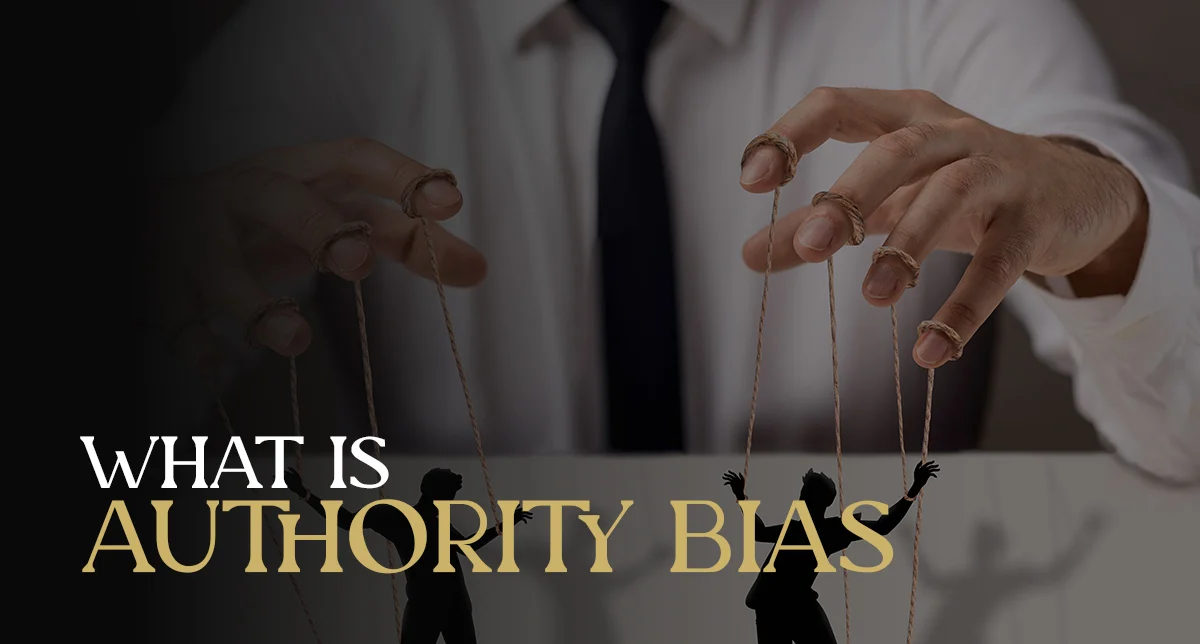
It’s called authority bias—and it’s more dangerous than you think.
The Experiment That Shocked the World
In the early 1960s, Yale psychologist Stanley Milgram ran a now-infamous experiment that changed the way we understand human behavior.
He wanted to study obedience. Specifically:
How far would someone go if an authority figure told them to keep going?
Participants were told they were part of a memory and learning study.
They were assigned the role of “teacher.”
In another room (unseen, but heard), was the “learner”—a person hooked up to what looked like an electric shock machine.
The task was simple:
Each time the learner got a question wrong, the teacher was instructed to give them an electric shock—starting small, increasing with every mistake.
The learner was an actor.
But the teachers didn’t know that.
As the shocks escalated, the learner screamed in pain.
They begged to stop.
Eventually… silence.
And what did the participants do?
Most looked uncomfortable.
Some hesitated.
Many questioned the ethics.
But when the man in the lab coat calmly said,
“The experiment requires that you continue,”
65% of participants delivered the final, labeled “lethal” shock.
Wait—Why?
Because he looked like he knew what he was doing.
Because he had credentials.
Because he was “the expert.”
That’s authority bias at work.
We defer to those in positions of perceived power—doctors, professors, CEOs, influencers, religious leaders—not because they’re always right, but because we’re conditioned to believe they must be.
It’s easier to obey than to trust our inner alarm.
And when you add fear, urgency, or uncertainty to the mix?
It gets even easier to abandon your values.
What’s Happening in the Brain?
Authority bias hijacks the amygdala—your emotional regulator and threat detector.
When your brain senses someone “in charge” is giving orders, it activates stress responses and quiets your prefrontal cortex, the part responsible for logic, ethics, and long-term vision.
It’s the same mechanism behind:
- Why patients don’t question doctors
- Why employees stay silent in meetings
- Why people blindly follow public figures
- Why we scroll and absorb instead of stop and discern
In other words:
Your biology will trick you into abandoning your beliefs… just to stay “safe” in the herd.
Breaking the Spell: Stand in Your Values
Here’s the truth no one likes to say:
Most people don’t need force to abandon their values.
They just need someone who sounds confident.
They trade their integrity for approval.
They trade intuition for instruction.
They say, “I’m just doing what I was told.”
At Plouton, we challenge that thinking.
Because real wealth begins with inner sovereignty.
If your values can be undone by someone with a title,
you weren’t rooted—you were rented.
How to Stay Grounded When the White Coat Shows Up
- Pause Before You Obey
Just because someone says it louder or faster doesn’t make it true.
Ask: Does this align with what I know to be right, real, and true? - Question the Premise
Experts can be wrong. Credentials aren’t character.
Authority bias only works if you believe your voice is less valid. - Come Back to Your Values
When in doubt, check your own code.
Is this decision aligned with your purpose—or someone else’s pressure? - Practice Micro-Resistance
Say no.
Ask why.
Opt out.
Teach your nervous system that challenge ≠ danger.
Don’t Be the 65%
Milgram’s experiment wasn’t about cruelty.
It was about how quickly we give away our power.
Not to tyrants.
To teachers.
To doctors.
To thought leaders.
To ourselves, when we put others on pedestals.
So ask yourself:
- Where am I deferring instead of discerning?
- Where am I still acting out of obedience, not alignment?
- Where have I outsourced my truth to someone in a “white coat”?
The man in the lab coat doesn’t live your life.
You do.
And your legacy won’t be measured by how well you followed orders—
But by how deeply you honored your values when it counted most.
Stand firm.
Even when the expert says otherwise.
That’s how WELLth is built.
